

How to Check Charcoal Moisture Content
How to Check Charcoal Moisture Content
Nothing ruins a great outdoor barbecue faster than high-moisture charcoal. High-moisture BBQ charcoal always ruins your grilling experience completely. It is extremely hard to ignite, makes continuous hissing sounds while burning, and can reduce thermal efficiency by up to 50%. Unqualified wet charcoal is the biggest hidden trouble for perfect outdoor barbecues.
To help you pick premium-quality charcoal, we are sharing 3 practical methods to test charcoal moisture content, including professional industrial standards and daily home inspection skills.
1. Professional Moisture Detection Method (GB/T 26913-2011 Standard)
For industrial production and official quality inspection, we follow the Chinese national standard GB/T 26913-2011 for bamboo charcoal testing.
Official Testing Rules
* Initial Weight & Drying: Weigh the original charcoal sample and dry it at 105℃士2℃ until its weight becomes constant.
* High-Temperature Ignition: Ignite the dried sample at a high temperature of 800°C±20°C to constant weight.
* Mass Loss Calculation: Calculate the moisture content by the mass loss ratio of the original sample.
Qualified Standard——Qualified machine-made bamboo charcoal requires a moisture content \le 9\%.
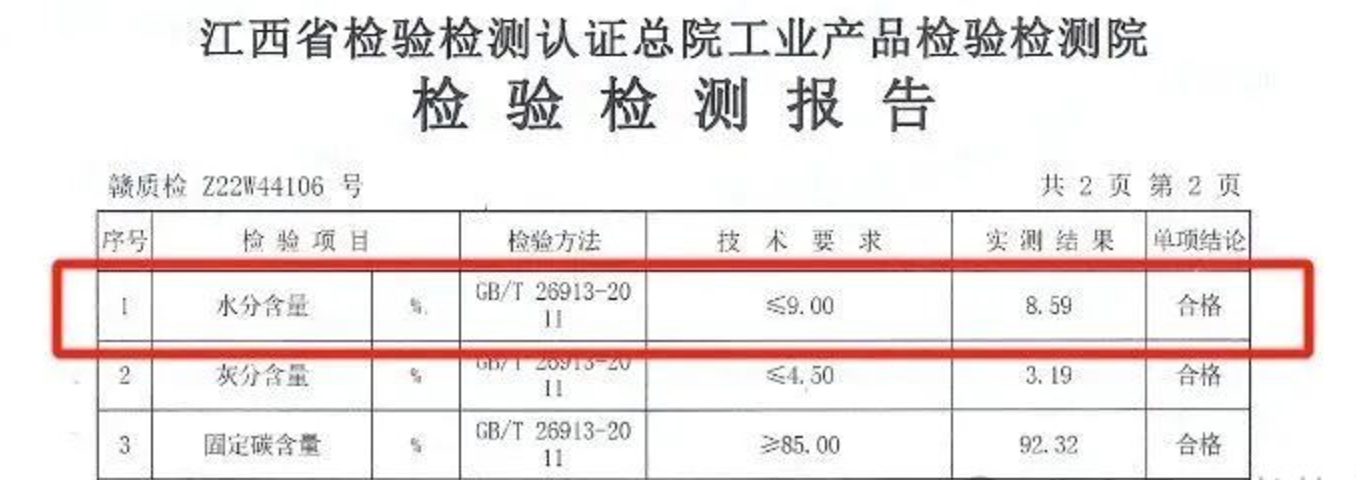
This professional method delivers 100% accurate results. However, it requires professional laboratory equipment and cannot be used for daily quick checks. For regular buyers and users, the following two simple methods are more practical.
2. Four-Step Quick Judgment: Look, Touch, Listen & Ignite
This is the most convenient daily method, which can filter out 80% of inferior wet charcoal products efficiently.
* Look at Appearance :
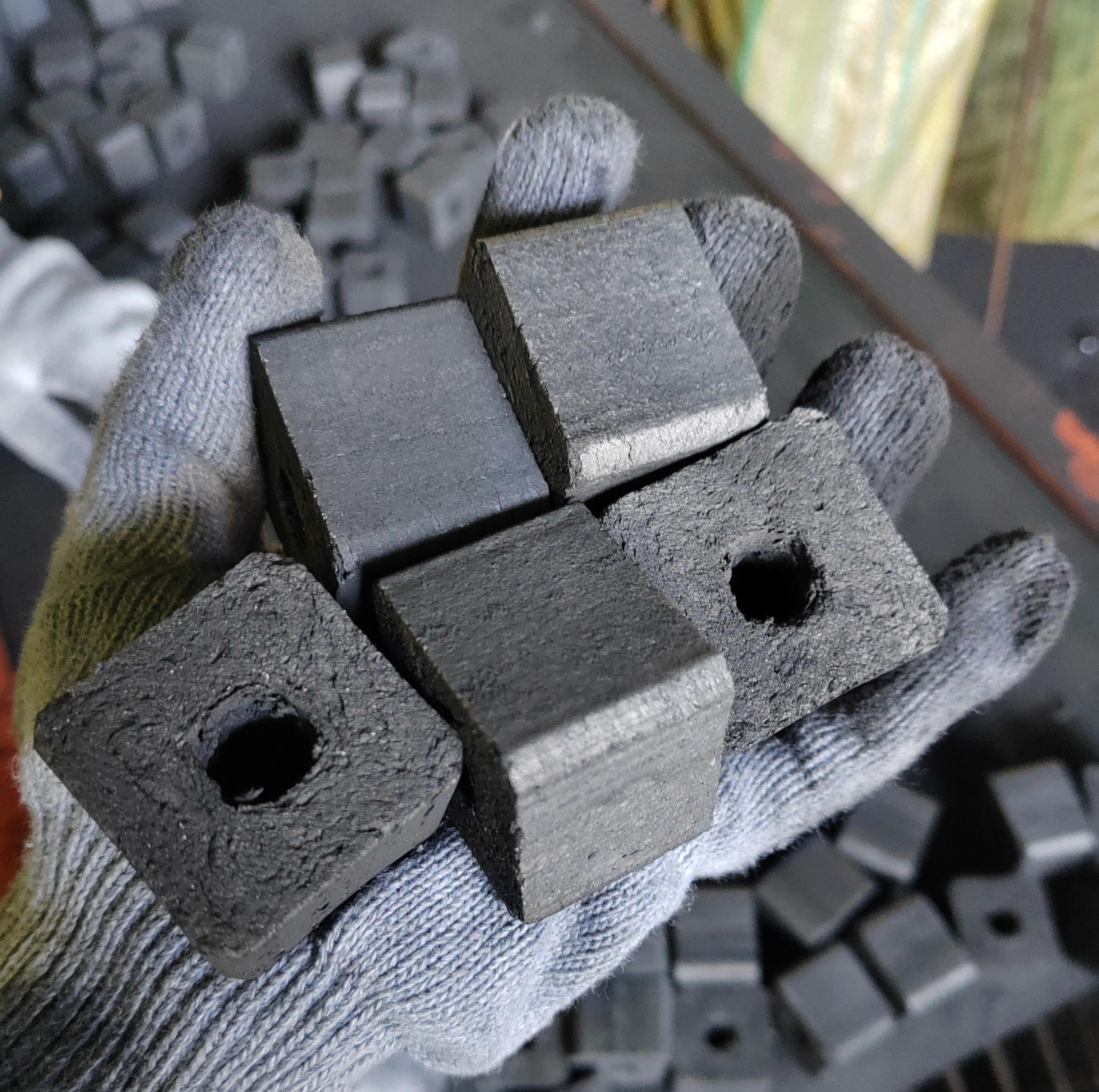
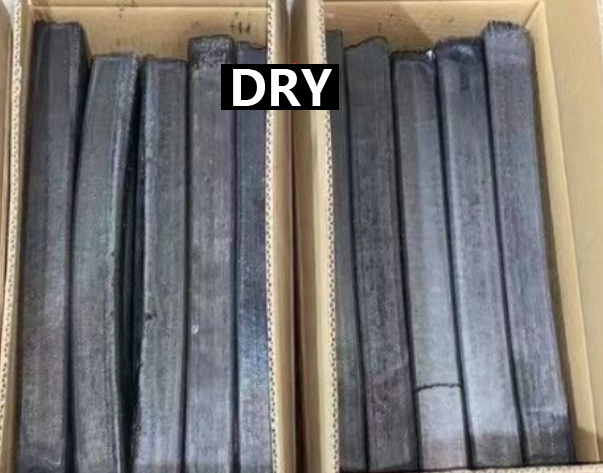
* Dry qualified charcoal: Smooth and glossy surface with a neat texture.
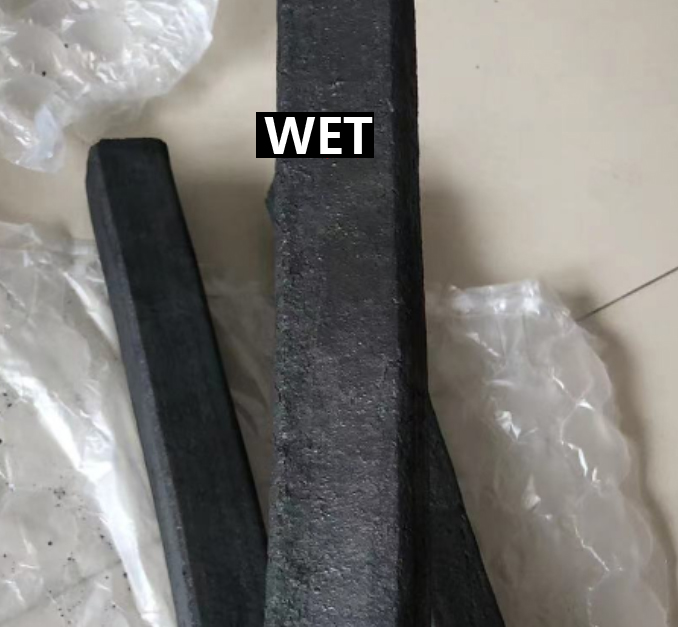
* High-moisture charcoal: Dull and dark surface, lacking luster.
* Touch by Hand :
* Dry charcoal: Dry and non-sticky, no damp feeling.
* Wet charcoal: Feels cold, with obvious granular and gritty texture.
* Listen to Knocking Sound :
* Dry charcoal: Makes a clear and crisp sound when knocked.
* Wet charcoal: Produces a dull, muffled sound, just like knocking on wood.
* Ignition Test :
* Dry charcoal: Catches fire quickly and burns steadily.
* Wet charcoal: Hard to ignite. Obvious water vapor escapes from charcoal pores during burning.
3. Weight Difference Detection (Core Factory Inspection Method)
This is our core sampling inspection method applied in every production batch to ensure stable charcoal quality.
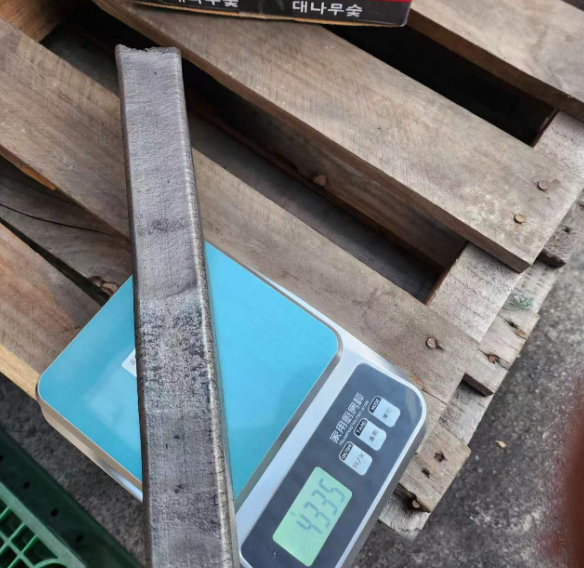
We take standard-sized charcoal rods (50 cm in length, 5 cm in width) for weight testing:
| Original raw material rod | 2.5 – 2.6 Jin | Processing Stage |
| Qualified finished charcoal | 0.8 – 0.9 Jin | PASSED (Moisture \le 9\%) |
| Overweight finished rod | > 1.0 Jin | REJECTED (Excessive Water) |
* Judgment standard: Single charcoal rod over 1 Jin means excessive moisture content and unqualified quality.
We strictly conduct random sampling tests during every production process to control the moisture content within the qualified standard range.
Final Summary & Key Takeaway
Professional laboratory testing guarantees precise data, while the four-step visual & tactile judgment and weight detection method are perfect for daily screening.Although the manual quick check cannot achieve 100% accuracy, it effectively helps every BBQ enthusiast and bulk buyer eliminate most defective high-moisture charcoal, avoid grilling disasters, and enjoy high-efficiency, stable, and long-time burning BBQ charcoal.